A complete maintenance log protects the value of a boat, makes surveys faster and helps the next engineer understand what was done. The best log is the one people actually keep up — so make it quick to add to.
What to record
- Routine service: oil and filter changes, impellers, anodes, belts, with engine hours.
- Repairs: what failed, what was replaced, part numbers and who did the work.
- Inspections: safety equipment checks, rigging checks, hull inspections.
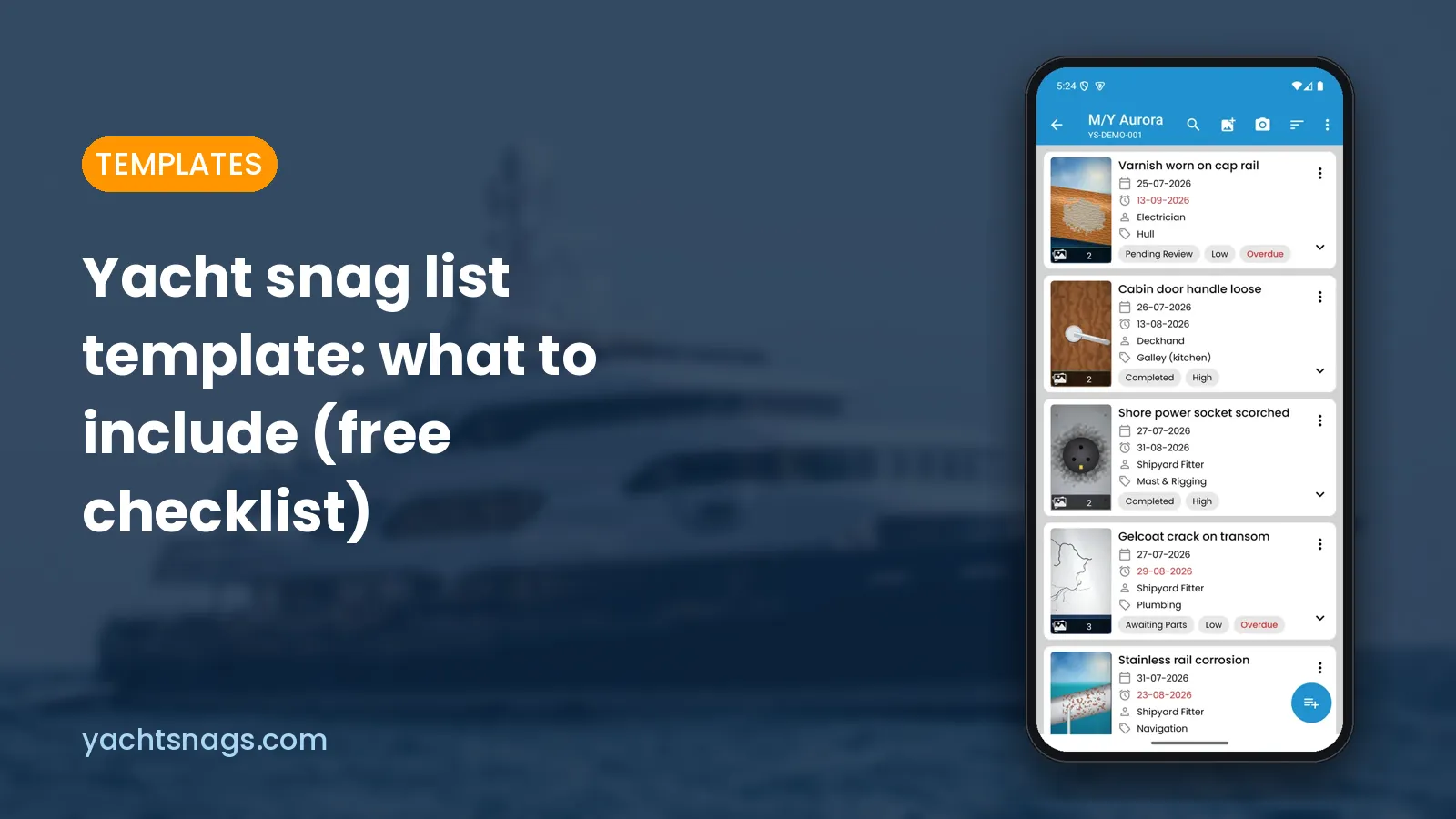
- Defects found: anything noticed but not yet fixed, with a photo.
- Costs and invoices: for budgeting and resale.
How often
Record service items when they happen, and do a short walk-round at a fixed interval — weekly in season, monthly in winter storage — to log new defects before they grow.
Habits that keep it alive
- Log from your phone on the spot, not from memory at the end of the day.
- Always attach a photo.
- Use the same location names every time.
- Turn open defects into a work list before every yard period.
Why it matters at resale
Buyers and surveyors trust boats with a documented history. A clean export of every service, repair and inspection — with photos and dates — answers questions before they are asked.
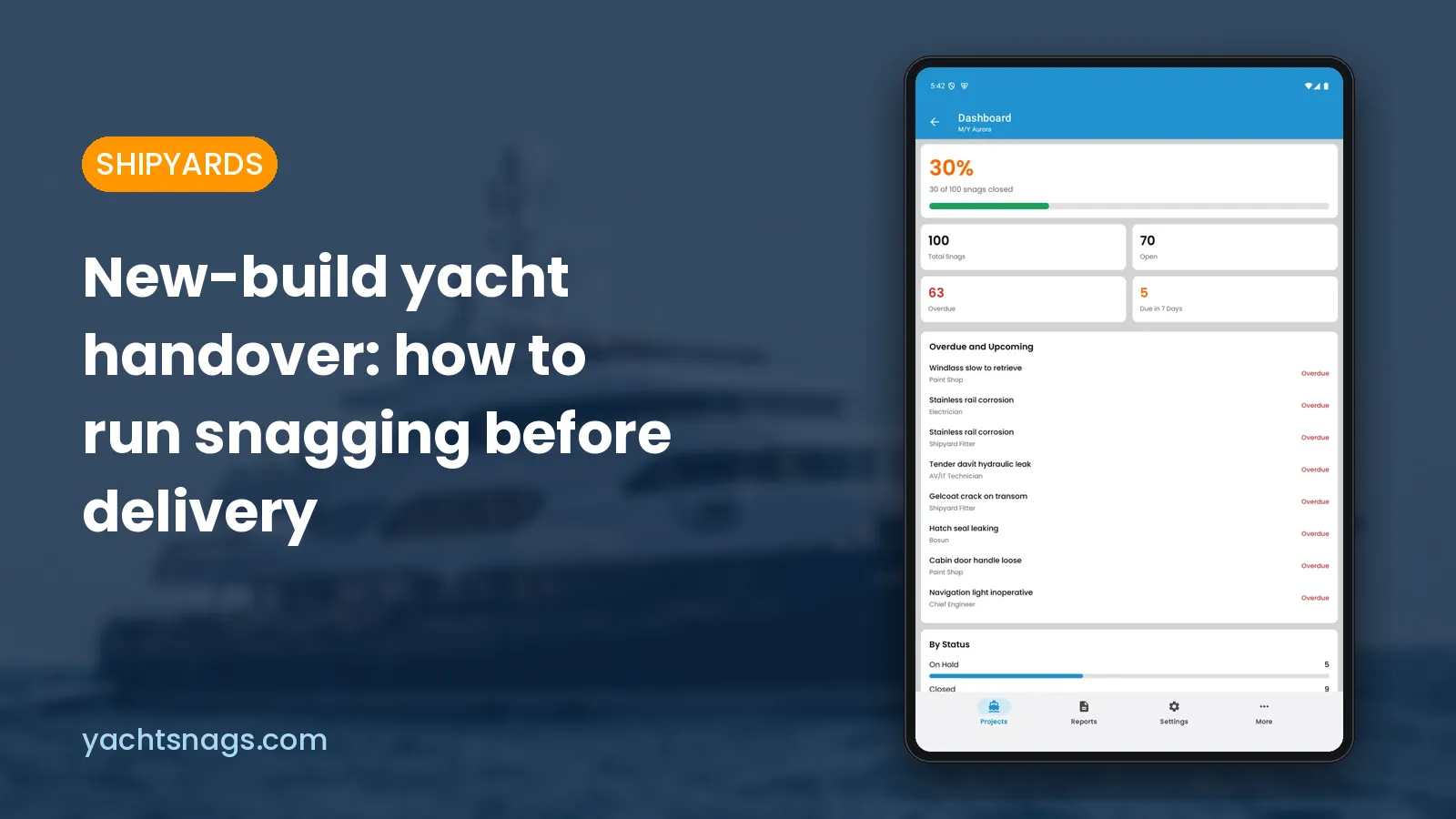
Do this on your phone. YachtSnags turns this checklist into a live snag list: photo, mark-up and status for each item, then a branded PDF report in one tap. Download free for Android and iOS.